
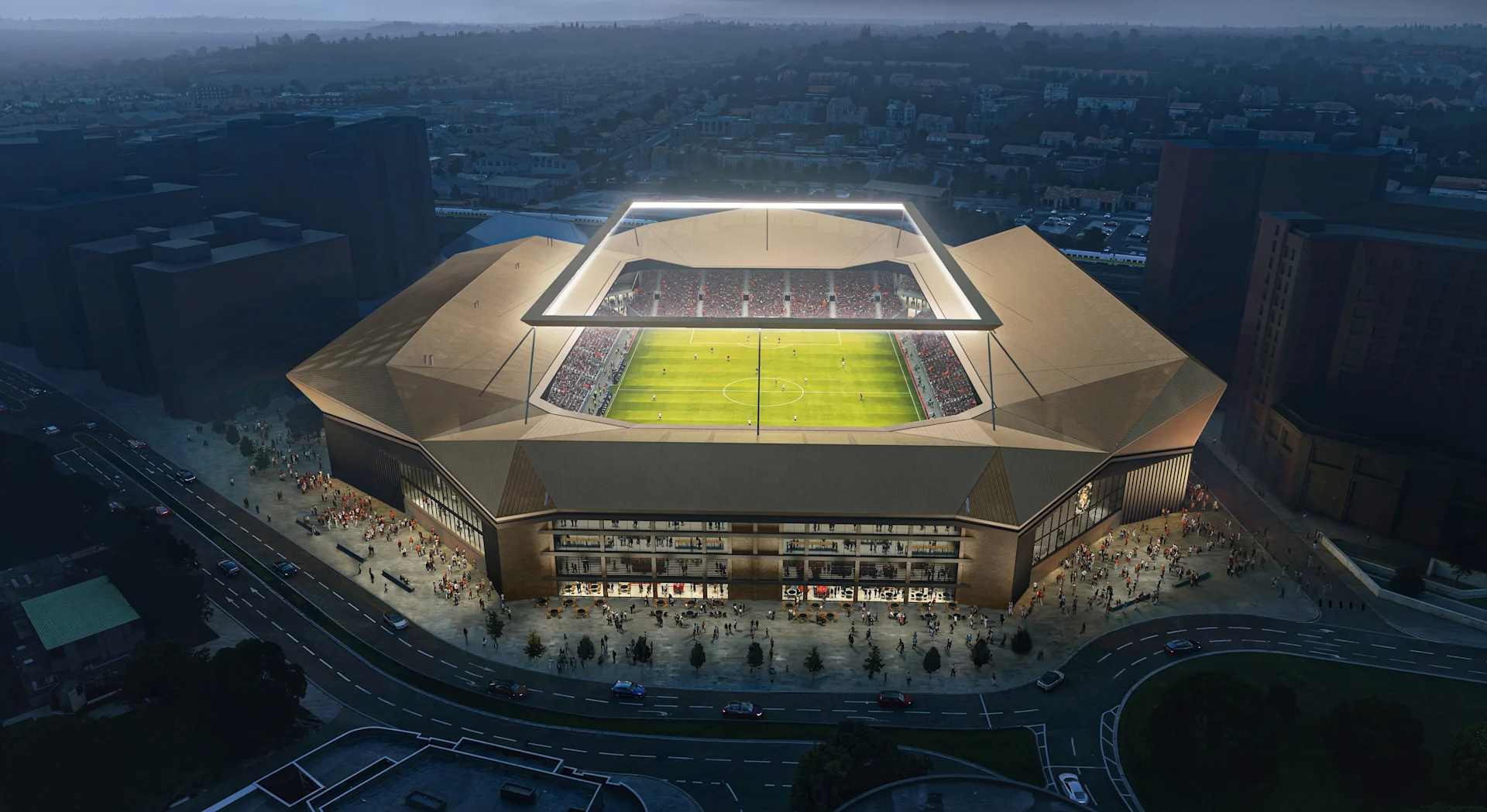
The project.
From the moment we were invited to join the Power Court Stadium project as CDM Principal Designer, it was clear that this would be a development unlike any other. The ambition was enormous: a new home for Luton Town Football Club rising from one of the most constrained urban sites in the region, surrounded by railway lines, busy public routes and a town centre already alive with regeneration activity. The excitement around the project was immediate, but so was the responsibility. If this was going to be a stadium for the community, safety had to sit at the heart of every decision, every drawing, every conversation.
Understanding the vision.
Our story began with understanding the place. Power Court is woven into the fabric of Luton, and the vision for the new stadium was shaped as much by local pride as by architectural aspiration. Before we spoke about risks or regulations, we took time to understand the narrative that the designers and the club were working towards. This meant immersing ourselves in the evolving design, listening carefully to the project team, and recognising the emotional connection between the scheme and the people it would serve. Only by understanding that context could we influence the design in a way that strengthened both its safety and its spirit.

Navigating the constraints.
It quickly became clear that the site’s physical constraints were going to define much of the safety journey. With railway infrastructure pressing closely along one edge, limited access routes, and a stadium bowl that needed to be lifted above challenging ground conditions, the questions of buildability and sequencing emerged far earlier than usual. Rather than waiting for risks to appear on paper, we made ourselves part of the creative process, joining design discussions and encouraging open reflection on how the stadium might be constructed, maintained and operated. This early integration allowed us to surface concerns well before they became fixed elements of the design and to suggest adjustments that protected workers and future users without diminishing the architectural intent.
Working seamlessly with the team.
As the design develops, the complexity grows. The stadium bowl, concourses, elevated pitch and public realm all carry their own technical demands. Our role is not to interrupt the momentum of the design but to bring clarity and calmness to the process. In meetings, workshops and informal conversations, we translate complicated risks into practical insights that the team could work with. By maintaining an approachable, collaborative tone, we create an environment where designers feel comfortable challenging their own assumptions and exploring safer alternatives.

Designing for the future.
Beyond the construction phase, we are always conscious of the stadium’s long life ahead. Every element has a future: a facade that would need cleaning, gantries that will require inspection, plant areas that would demand replacement. We explore these topics with the designers, testing how people would move, what could be reached safely, and where permanent access would be necessary. These conversations shape decisions that will make the stadium safer and more manageable not only during its construction, but for decades to come.

Becoming a trusted partner.
Through the project, our contribution becomes defined not by the documents we produce but by the trust we built. The design team comes to see us not as a checker of compliance, but as a partner in creating a stadium that can be delivered confidently, responsibly and with genuine care for the people who will build and use it. That is the essence of our work as CDM Principal Designer: to protect people by influencing design in a way that feels natural, collaborative and supportive.
A safe legacy for Luton.
As Power Court progresses towards reality, we take pride in knowing that our role helps shape a design that is both ambitious and safe, visionary and practical. The stadium will stand as a marker of Luton’s growth, energy and identity. Beneath its structure lies a story of thoughtful, people-first design. Safety is never a constraint on this project; it is part of its character. And being able to contribute to that legacy is something we’re incredibly proud of. We look forward to our continued work on this project.